
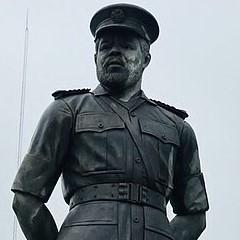
History often forces certain individuals into moments where there are no easy choices, only consequences. Chukwuemeka Odumegwu Ojukwu (Ikemba Nnewi) was one of those figures. To some, he remains a symbol of resistance and courage; to others, a controversial leader whose decisions carried immense human cost. But across perspectives, one thing is clear: his story cannot be separated from resilience.
Ojukwu did not emerge from obscurity. Educated at Oxford and raised in privilege, he could have lived a life far removed from conflict. Instead, he became the face of one of the most defining and tragic periods in Nigerian history, the Nigerian Civil War.
The Reason for the Fight
The roots of the war lie in deep ethnic, political, and economic tensions that intensified after Nigeria’s independence. Following a series of coups and countercoups, violence broke out, particularly targeting Igbo people in northern Nigeria. Thousands were killed, and many more fled back to the Eastern Region.
the focus is not just on war itself, but on what comes after
For Ojukwu, then the military governor of the East, the situation was no longer political, it was existential. The declaration of Biafra in 1967 was framed as a move to protect his people from further violence and marginalization. From his perspective, it was not rebellion for ambition, but a fight for survival.
Yet this decision came with enormous stakes. Secession meant war and war meant suffering on a scale that would test the limits of human endurance.
The Consequences of War
The Nigerian Civil War quickly became one of the most devastating conflicts in African history. Blockades, famine, and constant fighting led to the deaths of over a million people, many of them civilians, especially children.
Images of starving Biafran children shocked the world. The cost of resilience was measured in lives.
Ojukwu’s leadership during this period is often described as unwavering. Even as resources dwindled and defeat became increasingly likely, he continued to push forward. To his supporters, this was courage and determination. To critics, it was stubbornness that prolonged suffering.
History does not offer a simple verdict; it presents both realities at once.
Personality: Conviction and Defiance
Ojukwu’s personality was defined by strong conviction. He was articulate, confident, and deeply committed to his cause. He believed in the legitimacy of Biafra and carried himself with the authority of someone certain of his purpose.
But that same certainty also made compromise difficult.
Resilience, in his case, was not just endurance, it was refusal. A refusal to back down, even under immense pressure. That kind of strength is rare, but it is also complicated. It can inspire, and it can divide.
Innovation in the Face of Isolation
One of the lesser-discussed aspects of Biafra under Ojukwu is the level of innovation that emerged during the war. Cut off from international support and facing severe shortages, Biafran scientists and engineers developed local solutions to survive.
This included makeshift refineries, weapons, and technological improvisations, evidence of what necessity can produce under extreme conditions. Though Ojukwu was not the engineer behind these creations, his leadership created the environment where such innovation became essential.
It was resilience not just on the battlefield, but in intellect and creativity.
The Strength to Begin
It is easy, in hindsight, to analyze outcomes. It is harder to understand the mindset required to begin.
Declaring secession against a larger, better-equipped nation required immense resolve. Whether seen as bravery or miscalculation, it demanded a willingness to face overwhelming odds. That kind of decision is not made lightly, it carries the weight of millions of lives.
The Voices Around the War
The story of Biafra is not told by Ojukwu alone. It lives in the works of those who witnessed, endured, and reflected on it.
Chinua Achebe, one of Nigeria’s most influential literary figures, supported Biafra and served as a voice for its cause internationally. His later writings reflect both belief in the struggle and awareness of its tragic cost.
Nnamdi Azikiwe, Nigeria’s first president, initially associated with the Eastern Region, took a more complex path. He eventually called for peace and reintegration, illustrating how perspectives shifted even among those closely connected to the region.
In literature, the war’s emotional reality is captured powerfully.
In Survive the Peace by Cyprian Ekwensi, the focus is not just on war itself, but on what comes after. The fragile, uneasy return to normalcy. The title alone suggests a paradox: surviving peace can be as difficult as surviving war. The scars remain, shaping how people rebuild their lives.
Similarly, Chimamanda Ngozi Adichie, in Purple Hibiscus, offers glimpses of post-war Nigeria through personal and domestic experiences. While not centered entirely on the war, it reflects its lingering presence, how political history seeps into family life, silence, and memory.
Both works highlight a crucial truth: the consequences of conflict do not end when the fighting stops.
A Legacy That Resists Simplicity
Ojukwu’s story is not one of clear heroes and villains, but a fight to save a people from systematic marginalization, and possible murder.
What remains undeniable is the resilience it took to lead, to endure, and to persist in the face of overwhelming opposition. Whether one agrees with his decisions or not, Ojukwu represents a kind of strength that is both admirable and troubling, a reminder that history’s most powerful figures are often its most complex.