
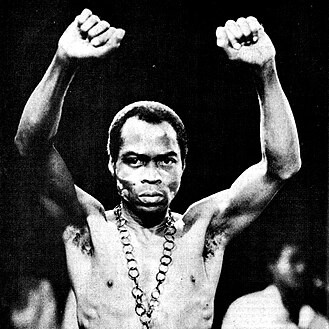
In every era, there are individuals who refuse to adjust their voices to fit the comfort of power. In Nigeria’s history, few embodied that resistance as boldly as Fela Kuti. At a time when fear often silenced criticism, Fela did the opposite, he amplified it.
Born into a politically conscious family, Fela’s defiance was not accidental. His mother, Funmilayo Ransome-Kuti, was a renowned activist who challenged colonial and local authority. That environment shaped his worldview early: power was to be questioned, not obeyed blindly. Over time, he transformed that mindset into music, creating Afrobeat a genre that was as political as it was rhythmic.
What made Fela extraordinary was not just his message, but the timing of it. He spoke out during some of Nigeria’s most tense and repressive military regimes, when dissent could lead to imprisonment or worse. Yet he remained unrelenting, openly criticizing corruption, oppression, and the abuse of power.
One of the most powerful examples of this courage is his song Coffin for Head of State.
This song was not just protest it was personal grief turned into national accusation. It was inspired by the events of 1977, when the Nigerian military launched a brutal attack on Fela’s commune, Kalakuta Republic. During that raid, his mother was thrown from a window, an act that led to her death. The incident occurred under the regime of Olusegun Obasanjo.
The message is clear: colonialism did not end with political independence; it lingered in the mind
In response, Fela carried a symbolic coffin to the seat of government, holding the state responsible for his mother’s death. The song reflects that act. Its meaning is layered: it mourns a personal loss, condemns state violence, and accuses leadership of moral failure. The “coffin” becomes more than an object, it is a message. A refusal to let injustice be buried quietly.
If “Coffin for Head of State” was Fela at his most confrontational, Gentleman reveals another dimension of his resistance his critique of cultural identity.
In “Gentleman,” Fela challenges the blind imitation of Western (or what he often referred to as “white man’s”) culture by Africans. The song questions why Africans would abandon their own identity in favor of foreign mannerisms, clothing, and social norms. With sharp irony, he contrasts the African man trying to behave like a European “gentleman” with the reality that such imitation often leads to a loss of authenticity.
The message is clear: colonialism did not end with political independence; it lingered in the mind. For Fela, true freedom required cultural confidence, not imitation. He wasn’t rejecting global influence entirely, but he was rejecting uncritical adoption the idea that foreign automatically meant superior.
Another major statement in this same vein is ITT (International Thief Thief).
In this track, Fela directly calls out corruption tied to multinational influence and local elites. The title itself is a play on International Telephone and Telegraph, turning it into “International Thief Thief.” The song criticizes the relationship between foreign corporations and Nigerian political figures, arguing that both sides benefit while ordinary citizens suffer.
Here, Fela expands his critique beyond Nigeria’s internal issues to a global system of exploitation. He highlights how economic control can mirror colonial patterns, where wealth flows outward while poverty remains local. Once again, his bravery is evident he names names, challenges powerful interests, and risks the consequences.
Across all these works, one theme remains constant: resistance.
Fela’s music was not designed to entertain alone; it was meant to confront. He stood against military regimes, exposed corruption, rejected cultural erasure, and challenged global power structures, all at a time when doing so came with real danger.
Time has only deepened the significance of his work. What once felt like immediate protest now reads as enduring commentary. His songs are no longer just reactions to specific events; they are reflections on power, identity, and freedom that continue to resonate.
In the end, Fela Kuti’s legacy is not just in Afrobeat, but in fearlessness. He showed that art can be a weapon, that truth can be loud, and that even in the height of tension, one voice if bold enough can refuse to be controlled.
Fela is known as the king of afrobeat in Nigeria and you can find most of his songs on every streaming platform.