
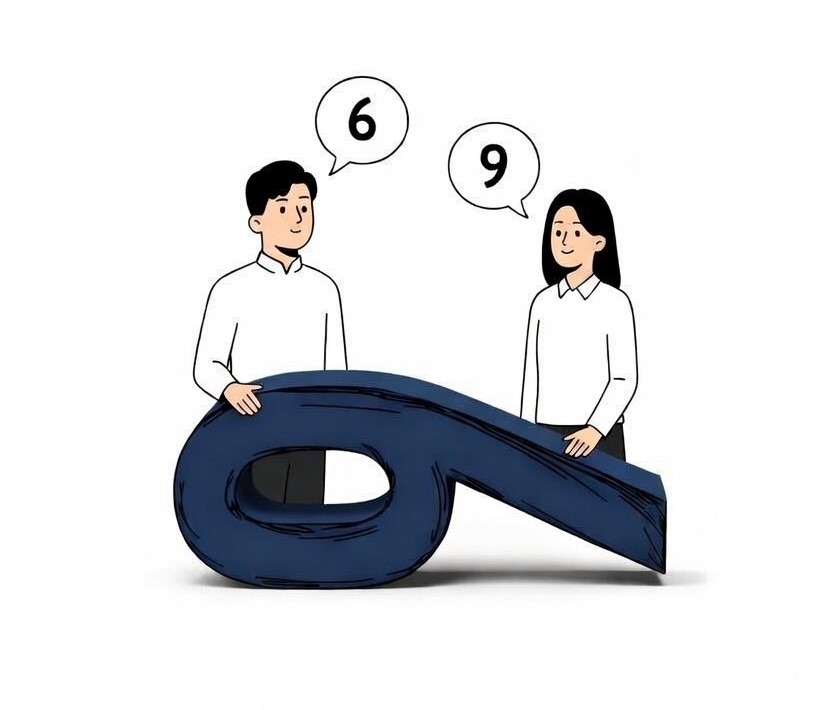
There is a quiet arrogance in believing that any single idea can stand forever as “right.” History, if nothing else, is a graveyard of certainties, a belief once held with conviction, now softened, reshaped, or abandoned entirely. What we often call truth is, more accurately, a reflection of perspective, and perspective is never still. It moves with time.
Every generation inherits a world already interpreted for them. Norms, values, and “common sense” arrive pre-packaged, presented as stable and reliable. Yet, as years pass, cracks begin to show. Ideas that once felt unquestionable begin to feel incomplete. Not necessarily wrong in their entirety but limited products of their moment.
Consider how societies evolve. Practices once accepted without hesitation can later become sources of discomfort or even moral outrage E.g. is the Jehovah’s witnesses stand against blood transfusion which has evolved from pre 1945 to 2000 and the recent “clarification” in March 2026 announcing rules which gave members room to make certain “personal decision” on matters concerning transfusion. So we see that ideas once dismissed or ridiculed can grow into widely accepted truths. This constant reversal does not mean humanity is simply inconsistent; it means we are responsive. As knowledge expands, as experiences diversify, and as contexts shift, so too does our understanding.
The concept of perspective is very exciting. A person’s perspective differs according to certain environmental, sociological and psychological condition. for instance, a person who works at the museum considers going to the museum as work or stress but for a visitor this trip represents leisure or relaxation and a feeling of excitement. Recently I watched an interview between Temi Otedola the daughter of a popular Nigerian billionaire and Korty, a popular youtuber.
Even on an individual level, this evolution is clear. A belief you held firmly five years ago may…
The billionaire’s daughter was asked about the lowest moment in her financial life, after a brief thought she recounted that at the lowest moment she had about $1000, Waw!!! most people her age could easily have considered that amount impossible and if they did have that amount, it would be considered the richest period of their life but not for a billionaire’s daughter. I would love to ask the same question to you the reader, what amount did you have in your bank at your lowest moment? And furthermore, how much money would make you consider yourself rich?
Time introduces new variables. Technology reshapes how we communicate and think. Cultural exchange broadens what we consider normal. Crises force us to reevaluate priorities. In each case, the lens through which we interpret reality changes. And when the lens changes, so does the picture.
This is why the notion of a universally “right” idea becomes difficult to defend. An idea may be logical, useful, and even necessary within a particular context, yet fail entirely in another. What works in one era may not survive the next. What seems obvious in one culture may feel foreign in another. Perspective is always anchored to circumstance.
Even on an individual level, this evolution is clear. A belief you held firmly five years ago may no longer feel as certain today. Not because you were foolish then, but because you have changed. Experience adds layers. Exposure challenges assumptions. Growth, by its nature, disrupts certainty.
None of this suggests that truth does not exist, but it does suggest that our access to it is partial and shifting. We interpret reality through the limits of our time, our environment, and our understanding. As those limits expand, so does our interpretation.
Perhaps the more enduring approach, then, is not to cling tightly to being right, but to remain open to being revised. To understand that every perspective is, at best, a snapshot a momentary alignment between knowledge and context. It may be clear, even convincing, but it is never final.
In the end, time does not just pass; it edits. It revises what we think we know, challenges what we assume is permanent, and reminds us that certainty is often temporary. What remains constant is not any single idea, but the ongoing shift in how we see the world and our place within it.