
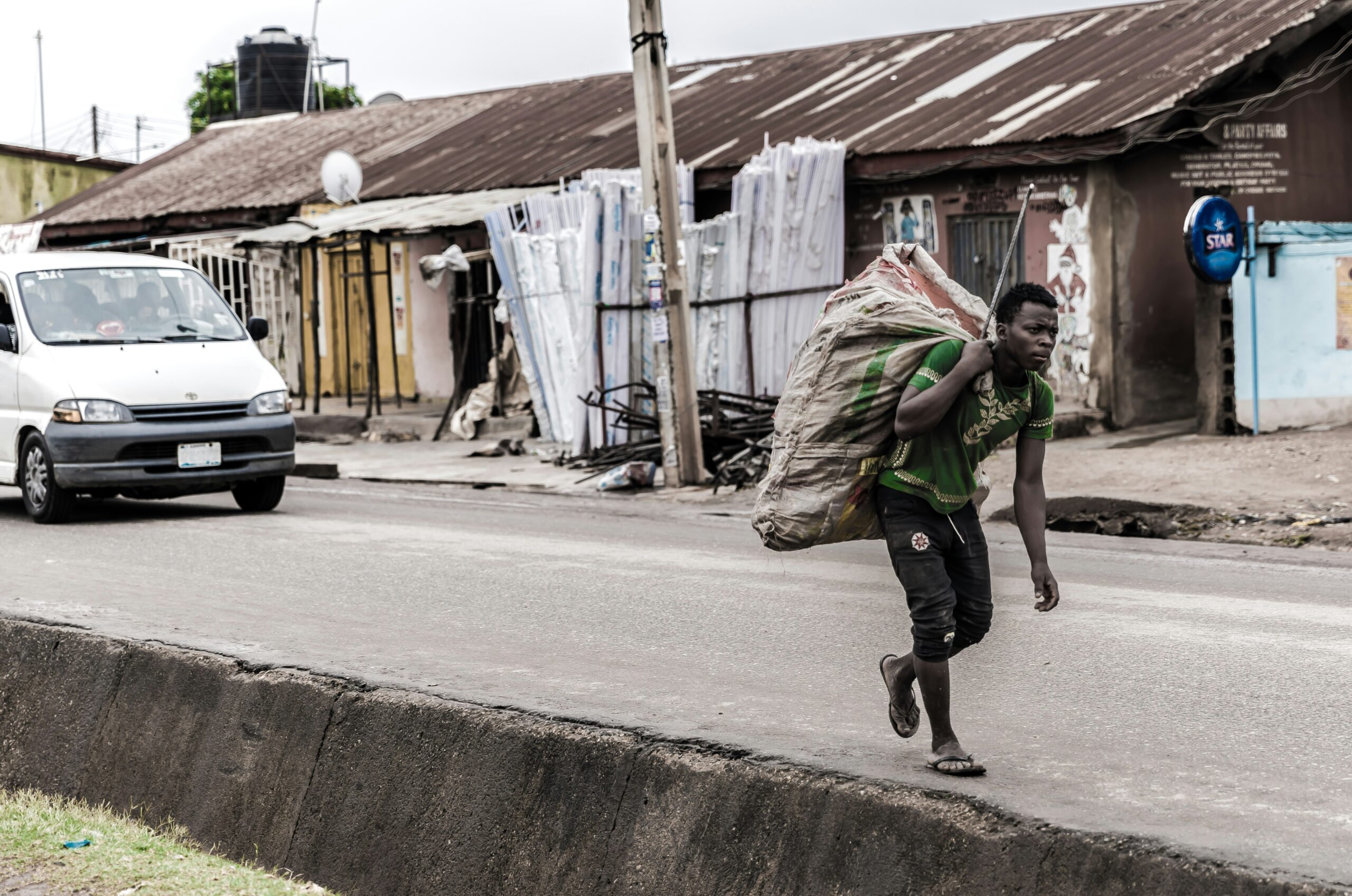
Poverty in Nigeria is often discussed as an economic failure but over time, a more uncomfortable perspective has emerged: that it is not just a problem, but in some cases, a political tool.
Nigeria is a country rich in natural and human resources, yet millions remain trapped in hardship. On the surface, this contradiction is blamed on poor planning, weak institutions, or corruption. But as time has passed, analysts and critics have begun to argue that the issue runs deeper that systemic poverty can sometimes serve those in power.
Research consistently shows that corruption and mismanagement play a major role in sustaining poverty. Public resources meant for development are often diverted, slowing growth and limiting opportunities for ordinary citizens. (RSIS International) This creates a cycle where development is stalled, inequality rises, and large portions of the population remain dependent.
That dependency is where the political dimension becomes clear.
In many cases, underdevelopment gives politicians leverage. When people lack access to jobs, education, healthcare, or infrastructure, they become more vulnerable to political influence whether through vote-buying, patronage, or promises of basic necessities. Systems of patronage, where leaders reward loyal supporters instead of investing broadly in development, have been identified as a recurring feature of Nigerian politics. (RSIS International). E.g. , online you hear statements like “why we love the ‘master strategist’ is because he remembers his people and rewards royalty”.
This idea is even explored in works like We Need You Poor So That We Can Rule, which argues that poverty can be deliberately sustained to maintain political control. While the book is satirical, its message reflects a widely discussed reality: when people struggle to survive, long-term accountability becomes harder to demand.
the conversation around poverty in Nigeria has shifted. It is … about how power is structured
Systematic Poverty in Nigeria: Power, Control, and the Politics of Dependence
Over time, several Nigerian political figures have been associated directly or indirectly with systems that critics say contributed to this cycle:
- Olusegun Obasanjo
His administration introduced reforms and anti-corruption agencies, but corruption remained widespread, and poverty levels persisted despite economic growth. Critics argue that structural issues were not fully addressed, allowing inequality to continue. (Wikipedia) - Bukola Saraki
Like many high-profile politicians, he has faced allegations and controversies related to financial management and political influence, reflecting broader concerns about elite control and accountability in Nigeria’s system. (Wikipedia) - Nasir El-Rufai
His career highlights the deeply embedded nature of political bargaining and accusations of corruption within governance structures, illustrating how power dynamics can overshadow transparent development processes. (Wikipedia)
Recent investigations into funds meant for poverty alleviation further reinforce this concern. Misuse of such funds has been uncovered, showing how even programs designed to help the poor can be compromised. (Reuters)
The result is a cycle:
- Poverty limits independence
- Limited independence increases political control
- Political control reduces pressure for real development
- And the cycle continues
Breaking that cycle is difficult because it requires dismantling not just policies, but incentives. True development, education, infrastructure, economic opportunities which would empower citizens. And empowered citizens are harder to control.
So over time, the conversation around poverty in Nigeria has shifted. It is no longer just about lack of resources, but about how power is structured, how decisions are made, and who benefits from the status quo.
In the end, systematic poverty is not just an economic condition. It is deeply tied to governance, to accountability, and to the evolving relationship between leaders and the people they serve.