
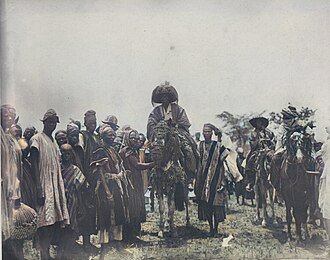
The Oyo Empire was one of the most powerful and best-organized states in pre-colonial West Africa. At its peak in the 18th century, it dominated large parts of present-day Southwestern Nigeria, Benin Republic, and Togo. Known for its sophisticated political system, powerful military, and economic strength, the Oyo Empire remains a shining example of indigenous African governance and statecraft.
Often called the “Yoruba Empire,” Oyo’s influence shaped Yoruba culture, language, religion, and political traditions that are still visible in Nigeria today.
Origins and Rise of the Empire
The Oyo Empire was founded around the 14th century by Prince Oranmiyan, a descendant of Oduduwa from Ile-Ife. The empire began as a small Yoruba kingdom but grew rapidly due to its strategic location for trade, strong leadership, and military innovation.
The real golden age of Oyo came in the 17th and 18th centuries under powerful Alaafins (kings) such as:
– Alaafin Abipa
– Alaafin Ajagbo
– Alaafin Agaja
– Alaafin Abiodun
At its height, Oyo controlled trade routes between the forest zones and the savannah, becoming a major player in regional commerce, including the Atlantic slave trade.
The Political and Administrative Structure of the Oyo Empire
What made Oyo unique was its sophisticated system of checks and balances one of the most advanced governance structures in pre-colonial Africa.
By the 1830s, the old Oyo Empire had collapsed.
- The Alaafin (Supreme King)
– The Alaafin was the spiritual and political head of the empire.
– He was considered sacred and traced his lineage to Oranmiyan and Oduduwa.
– However, his pozer was not absolute.
- The Oyomesi Council
This was a powerful council of seven kingmakers headed by the Bashorun (Prime Minister).
– They advised the Alaafin and had the power to reject or even compel an Alaafin to commit ritual suicide if he became tyrannical or lost the support of the people.
– This created a remarkable system of accountability.
- The Ogboni Society
A secret society of nobles and elders that acted as a check on both the Alaafin and the Oyomesi. They represented the voice of the people and handled judicial and religious matters.
- Provincial Administration
The empire was divided into provinces (metropolitan and tributary).
– Each province had its own ruler (Baale or Oni) who paid tribute to Oyo.
– A system of royal messengers (Ilari) ensured the Alaafin’s authority reached distant territories.
– Loyal princes and military commanders were often appointed to govern conquered territories.
- Military Structure
Oyo had one of the strongest armies in West Africa:
– A professional cavalry force (famous for its horsemen).
– Infantry units armed with spears, bows, and later guns.
– The empire maintained a standing army and could mobilize large forces quickly.
– Military leaders were highly respected and often rewarded with titles and land.
Economic Foundation
The Oyo Empire thrived on:
– Long-distance trade (kola nuts, cloth, salt, slaves, horses)
– Agricultural production (yams, maize, livestock)
– Craft industries (weaving, blacksmithing, leatherwork)
– Tribute from vassal states
This economic strength funded a wealthy court and supported grand festivals and ceremonies.
Role of Women in Oyo
Women played important roles:
– The Iyaloja (Mother of the Market) was a powerful title controlling trade.
– The Alaafin’s wives and royal princesses had significant influence.
– Some women served as priestesses and members of powerful societies.
Decline and Fall of the Empire
The empire began declining in the late 18th and early 19th centuries due to:
– Internal power struggles between the Alaafin and Oyomesi
– Series of weak kings
– Rebellions from vassal states (especially the rise of the Ibadan Empire and Ilorin under Fulani influence)
– The impact of the Atlantic slave trade destabilizing the region
– Jihadist pressures from the north
By the 1830s, the old Oyo Empire had collapsed. New powers like Ibadan rose from its ashes, and the British eventually colonized the region in the late 19th century.
Legacy in Modern Nigeria
The Oyo Empire’s influence is still very strong today:
– Many Yoruba traditional rulers trace their legitimacy to Oyo.
– The Alaafin of Oyo remains one of the most respected monarchs in Nigeria.
– Yoruba political culture — emphasis on consultation, checks and balances, and diplomacy — reflects Oyo’s old system.
– Festivals like the Oro, Egungun, and Sango festivals continue to celebrate Oyo heritage.
Important Lessons from the Oyo Empire
- Strong institutions matter — Oyo’s system of checks and balances prevented absolute tyranny for centuries.
- Power must be accountable — The ability to remove a bad king was revolutionary.
- Military strength must be balanced with good governance — Over-reliance on military expansion contributed to its fall.
- Unity is fragile — Internal divisions made the empire vulnerable to external forces.
- Cultural pride is powerful — Oyo’s rich traditions continue to shape Yoruba identity across Nigeria and the diaspora.
The Oyo Empire was more than just a kingdom of warriors and traders. It was a highly organized state with a sophisticated constitution that rivalled many European systems of its time. Its blend of monarchy, aristocracy, and people’s representation showed that Africans had developed advanced governance long before colonial rule.
As Nigerians, especially the Yoruba, we should study Oyo not just for pride, but for wisdom. The empire teaches us that strong leadership, institutional checks, economic strength, and cultural unity are the foundations of greatness.