
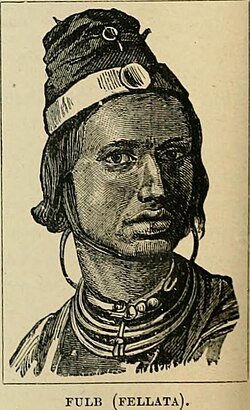
The Sokoto Caliphate was one of the most significant Islamic revolutions and empires in 19th-century Africa. Founded in 1804 by Sheikh Usman dan Fodio, it became the largest and most influential Islamic state in West Africa, covering vast territories across present-day Northern Nigeria, parts of Niger, Cameroon, and Benin Republic.
The Caliphate transformed politics, religion, education, law, and society in the region and remains a major influence on Northern Nigerian identity, politics, and Islamic scholarship till today.
Background and Causes of the Jihad
By the late 18th century, the Hausa kingdoms (Gobir, Kano, Katsina, Zazzau, etc.) were powerful but faced serious problems:
– Heavy taxation and corruption
– Oppression of the poor and peasants
– Mixing of traditional pagan practices with Islam
– Moral decay among some rulers and elites
– Injustice and arbitrary rule
Sheikh Usman dan Fodio (1754–1817), a Fulani Islamic scholar, preacher, and reformer, began calling for change. He preached against injustice, urged return to pure Islamic practices, and attracted a large following among the common people, scholars, and Fulani clans.
After years of peaceful preaching, the king of Gobir (Yunfa) attempted to assassinate him. In 1804, Usman dan Fodio declared Jihad (holy struggle) against corruption and injustice.
The Formation of the Sokoto Caliphate (1804–1808)
The Jihad spread rapidly like wildfire across the Hausa states. Key events:
– 1804: Usman dan Fodio is chosen as Amir al-Mu’minin (Commander of the Faithful) — the first Caliph.
– 1805–1808: Major Hausa kingdoms (Kano, Katsina, Zazzau, Bauchi, etc.) fell to the Mujahideen (fighters).
– 1808: Alkalawa, the capital of Gobir, was captured marking the end of the old Hausa kingdoms.
– 1817: Usman dan Fodio retired to Gudu and later passed away. His son, Muhammad Bello, became the second Sultan of Sokoto.
The Caliphate established Sokoto as the spiritual and political capital, while Gwandu served as a major administrative centre. The empire was structured as a confederation of semi-autonomous emirates that paid allegiance to the Sultan in Sokoto.
Administrative and Governance Structure
The Sokoto Caliphate had one of the most organized systems in pre-colonial Africa:
– Central Leadership: The Sultan of Sokoto (Caliph) was the supreme leader.
– Emirates: Each major city had an Emir who governed locally but followed Sharia and central directives.
– Judicial System: Sharia law was strictly applied. Qadis (judges) were appointed across the empire.
– Taxation and Economy: Fairer Islamic taxation system (Zakat, Jizya, Kharaj). Agriculture, trade (especially kola nuts, leather, cloth), and scholarship flourished.
– Education: Massive emphasis on Islamic education. Schools (Madrasas) were established everywhere. Women were encouraged to seek knowledge Nana Asma’u, daughter of Usman dan Fodio, was a renowned scholar and poet who established a powerful women’s education network.
Key Figures of the Caliphate
– Usman dan Fodio: Visionary scholar, leader, and reformer. Wrote over 100 books.
– Muhammad Bello: Brilliant administrator and scholar who consolidated the Caliphate.
– Nana Asma’u: One of Africa’s most celebrated female scholars. She wrote poetry in Arabic, Fulfulde, and Hausa and promoted women’s education.
– Abdullahi dan Fodio: Usman’s brother and a great administrator of Gwandu.
Achievements and Contributions
– Unified diverse ethnic groups (Hausa, Fulani, Nupe, etc.) under one Islamic banner.
– Spread of Islamic knowledge and literacy across the region.
– Economic growth through secure trade routes.
– Social reforms — reduced oppression of the poor and slaves in some aspects.
– Intellectual renaissance — thousands of books and manuscripts were produced.
Challenges and Decline
The Caliphate faced internal succession disputes, external threats (especially from the expanding French and British empires), and occasional rebellions.
In 1903, the British conquered Sokoto during the colonial expansion. Sultan Attahiru I was killed in battle, and the Caliphate was incorporated into the Northern Protectorate. However, the British cleverly retained the Caliphate structure through Indirect Rule, allowing Emirs and the Sultan to continue with some authority.
Today, the Sultanate of Sokoto continues as a symbol of continuity
Legacy in Modern Nigeria
The Sokoto Caliphate’s impact is still very strong:
– The Sultan of Sokoto remains the most influential traditional ruler in Northern Nigeria and a major spiritual leader for Nigerian Muslims.
– Sharia law in some Northern states has roots in the Caliphate’s legal system.
– Islamic education (Tsangaya and Madrasa system) continues today.
– The Jihad remains a source of inspiration and, sometimes, controversy in political and religious discourse.
– Many Northern political leaders trace their legitimacy to the Caliphate heritage.
Lessons from the Sokoto Caliphate
- Ideas are powerful — A scholar with conviction and followers changed the political map of West Africa.
- Justice drives revolutions — The Jihad succeeded because people were tired of oppression.
- Education transforms society — The Caliphate’s emphasis on learning created a lasting intellectual tradition.
- Women’s role matters — Nana Asma’u proved that women can be scholars, leaders, and reformers.
- Governance systems can adapt — The Caliphate structure survived even after colonial conquest.
The Sokoto Caliphate was not just a religious movement it was a comprehensive revolution that reshaped politics, law, education, and society in Northern Nigeria. It demonstrated that Africans could organize large, sophisticated states based on justice, scholarship, and faith.
As Nigerians, we must study this history objectively celebrating its achievements in scholarship, administration, and social reform, while learning from its challenges. The Caliphate reminds us that Northern Nigeria has a rich tradition of leadership, learning, and resilience.
Today, the Sultanate of Sokoto continues as a symbol of continuity between Nigeria’s proud Islamic past and its complex present. Understanding the Sokoto Caliphate is key to understanding modern Northern Nigeria.
The fire of knowledge and reform lit by Usman dan Fodio in 1804 still burns in many hearts across the Sahel